The world of scientific artistry has taken a mesmerizing turn with the advent of liquid nitrogen-assisted instant solidification techniques. This groundbreaking approach allows researchers and artists alike to capture the fleeting beauty of liquid metals in their most dynamic states—freezing intricate formations that would otherwise vanish in milliseconds. The marriage of extreme cryogenics and metallurgy has birthed an entirely new medium for both scientific study and aesthetic expression.
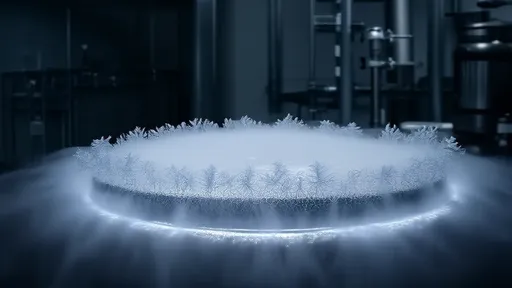
At the core of this technique lies liquid nitrogen's astonishing ability to drop temperatures to -196°C (-321°F) within fractions of second. When precisely applied to molten metal alloys, the supercooled liquid creates what experts call "thermal shock crystallization"—a process that arrests atomic movement so abruptly that the metal retains its liquid-phase characteristics while becoming physically solid. The resulting structures showcase dendritic patterns, fractal geometries, and surface tensions that would be impossible to preserve through conventional cooling methods.
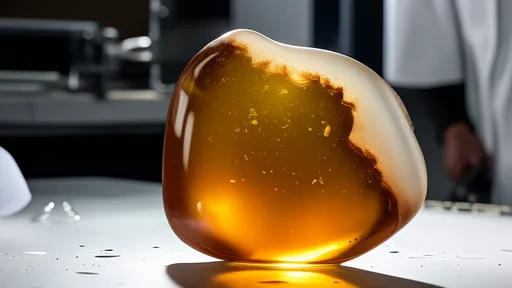
Laboratories specializing in materials science have become unexpected galleries, with researchers discovering that different alloys produce distinct artistic signatures under rapid cryogenic treatment. Bismuth-tin alloys, for instance, form intricate spiral patterns resembling microscopic galaxies, while gallium-indium mixtures solidify into shimmering, organic-looking structures reminiscent of coral reefs. The thickness of the molten metal layer, pouring technique, and even ambient humidity all contribute to the final frozen composition.
Beyond its visual appeal, this technique provides material scientists with unprecedented insights into metallic phase transitions. High-speed cameras recording at 100,000 frames per second reveal how crystal structures propagate differently under near-instantaneous freezing compared to gradual cooling. These observations are challenging long-held assumptions about metal solidification and may lead to stronger, more flexible alloy designs for aerospace and medical applications.
The artistic community has embraced this technology with particular enthusiasm, seeing it as a way to make tangible the normally invisible forces governing fluid dynamics. Installation artists are creating large-scale works by pouring molten metal onto liquid nitrogen-cooled surfaces, producing sculptures that appear frozen mid-splash. Some practitioners combine the technique with traditional metalworking, allowing portions to cool naturally while flash-freezing specific sections to create striking contrasts between smooth and crystalline surfaces.
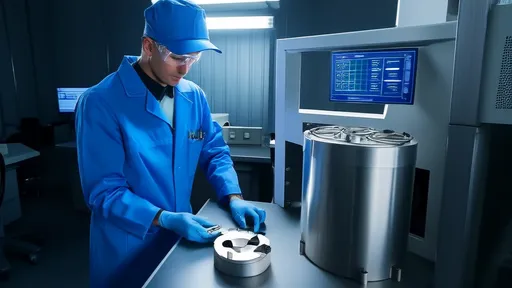
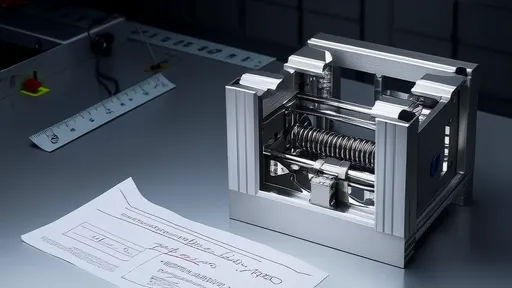
Safety considerations remain paramount in this emerging field. The violent reaction between extremely hot and cold substances requires specially designed containment systems, with most practitioners using vacuum-insulated pouring apparatus and robotic arms for manipulation. Proper ventilation is crucial as some metal vapors can become toxic when rapidly cooled. These technical challenges haven't dampened enthusiasm—if anything, they've added to the technique's mystique among avant-garde creators.
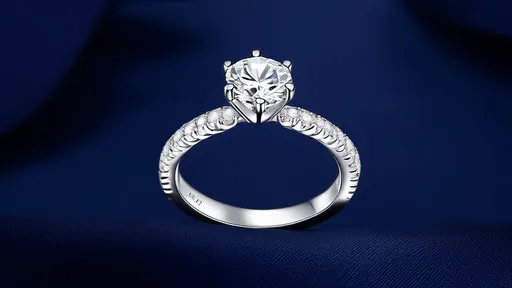
Commercial applications are already emerging, particularly in jewelry design. Designers are crafting one-of-a-kind pendants and rings featuring the organic textures preserved through instant cryogenic solidification. The fashion world has taken notice too, with several haute couture houses incorporating frozen metal filigree into dramatic accessories that maintain the appearance of liquid metal frozen in time.
Looking forward, researchers are experimenting with combining this technique with 3D printing technologies. Preliminary experiments involve extruding molten metal directly into liquid nitrogen baths, potentially allowing for the creation of complex, free-form metal structures with unique crystalline properties. Other teams are investigating how varying the nitrogen's temperature or introducing controlled impurities might yield even more dramatic visual effects.
This fusion of science and art continues to evolve at a remarkable pace, with each experiment yielding surprises. What began as a laboratory curiosity has blossomed into both a valuable analytical tool and a vibrant new artistic medium. As techniques become more refined and accessible, we may soon see liquid nitrogen metal sculptures gracing museums alongside traditional bronzes—a testament to human ingenuity in harnessing nature's most fleeting moments of beauty.
By /Aug 19, 2025
By /Aug 19, 2025

By /Aug 19, 2025
By /Aug 19, 2025

By /Aug 19, 2025

By /Aug 19, 2025
By /Aug 19, 2025
By /Aug 19, 2025

By /Aug 19, 2025

By /Aug 19, 2025
By /Aug 19, 2025
By /Aug 19, 2025

By /Aug 19, 2025
By /Aug 19, 2025
By /Aug 19, 2025
By /Aug 19, 2025

By /Aug 19, 2025
By /Aug 19, 2025

By /Aug 19, 2025

By /Aug 19, 2025
