For those who live and breathe the deep, resonant frequencies of music, the true test of any audio setup lies not in its sparkling highs or rich mids, but in its ability to deliver earth-shaking, chest-thumping bass. Bass enthusiasts—the audiophiles who crave the subsonic and the subterranean—know that a speaker's worth is measured by its lowest frequencies. It's not just about volume; it's about depth, clarity, and the physical sensation that only well-reproduced bass can provide. If you consider yourself part of this community, or if you're simply curious about exploring the nether regions of sound, this guide is for you. We're diving into the world of low-end performance, using a curated selection of tracks from bass lovers' private playlists to help you test your speakers' limits and discover what they're truly capable of.
Why focus on bass? In many ways, bass is the foundation of music. It provides the rhythmic pulse, the emotional weight, and the immersive quality that can make or break a listening experience. However, reproducing bass accurately is one of the biggest challenges in audio engineering. Cheap speakers often exaggerate mid-bass to create the illusion of depth, while truly capable systems can cleanly articulate frequencies down to 20Hz or lower—the realm where sound is felt as much as heard. This distinction separates the mediocre from the magnificent. By testing with tracks known for their deep bass content, you can uncover whether your speakers are genuinely full-range or if they're just pretending.
Before we get into the playlist, it's important to understand what we're listening for. When we talk about a speaker's "lower limit," we're referring to the lowest frequency it can reproduce at a usable volume level—usually within 3dB of its average output. This is often called the frequency response下限. But numbers only tell part of the story. The quality of bass matters just as much as the quantity. Look for speakers that maintain control and articulation even at the deepest frequencies. Muddy, boomy, or distorted bass is a sign of a system struggling beyond its capabilities. Clean, tight, and powerful bass indicates a well-designed driver and enclosure working in harmony.
Now, let's move on to the music. The following tracks have been handpicked from the private collections of dedicated bass heads. They span multiple genres but share a common trait: serious low-end content that will push your speakers to their limits. Use these not as a casual listening playlist, but as a diagnostic tool. Play them at moderate to high volumes in a well-treated room, and listen critically. Pay attention to how your system handles the demands of each track. Does the bass remain clear and defined, or does it become a messy rumble? Can you feel the physical impact, or is it just noise? These questions will guide your assessment.
First up, "Bass I Love You" by Bassotronics. This track is almost a cliché in bass-testing circles, and for good reason. It's essentially a sine wave sweep that travels from higher frequencies down to infrasonic levels, often dipping below 30Hz. If your speakers can reproduce this track without distortion—and if you can actually hear (and feel) the lowest notes—you've got a capable system. Many bookshelf speakers and soundbars will start to struggle around 40-50Hz, rolling off sharply and losing output. Larger floor-standing speakers or dedicated subwoofers will handle it with ease, maintaining output down to 25Hz or lower.
Another classic for testing pure extension is "Decaf" by Wiz Khalifa, not for the music itself but for the remixes that often feature extended 808 bass drops. These tracks are designed to highlight sub-bass, with frequencies often sitting between 25Hz and 40Hz. Listen for clarity and impact. Does the bass sound like a distinct note, or is it an undefined thump? Higher-quality systems will articulate the pitch of the bass, even at these extremes, while cheaper ones may compress or distort the signal.
For something more musical but equally demanding, try "Limit to Your Love" by James Blake. The song features a prominent sub-bass line that dips very low, with sudden starts and stops that test a speaker's transient response—its ability to start and stop quickly. Poor speakers will struggle with the sudden silence, often producing a lingering boom or port noise. Well-designed speakers will handle these transients cleanly, with the bass stopping as abruptly as it starts.
In the electronic realm, "Windowlicker" by Aphex Twin is a favorite. It's not just about deep bass; it's about complex, layered low-end that requires a system to remain articulate amidst chaos. The track has rapid bass sequences and overlapping frequencies that can easily become muddled on inferior equipment. If your speakers can keep the bass lines distinct and punchy, you're in good shape.
Hip-hop fans might turn to "HUMBLE." by Kendrick Lamar. The production on this track is pristine, with a deep 808 bass that hits hard and clean. It's a test of both extension and power. Can your speakers deliver the punch without sounding strained? Do the bass notes have texture and detail, or are they just a monotonous drone? This track separates systems that can play loud from those that can play well.
For a more acoustic test, "Why So Serious?" from The Dark Knight soundtrack, composed by Hans Zimmer, is excellent. It features a long, descending tone that reaches incredibly low frequencies, accompanied by complex orchestration. This tests not only raw extension but also how well your speakers integrate bass with the rest of the frequency spectrum. There should be a seamless blend, with the deep tones providing foundation without overpowering the mids and highs.
As you work through these tracks, remember that room acoustics play a huge role in bass performance. Even the best speakers can sound boomy or weak in a poorly treated room. Bass waves are long and interact strongly with room boundaries, creating peaks and nulls—areas where bass is exaggerated or canceled out. If you notice inconsistent bass response as you move around the room, that's likely a room issue, not a speaker issue. To get the most accurate assessment, try to listen from the primary seating position and consider adding bass traps or acoustic panels if problems persist.
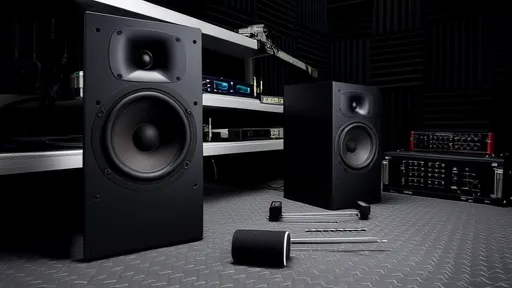
So what do you do if your speakers fail these tests? If you're hearing distortion, port noise, or a lack of output below a certain point, it might be time for an upgrade. For true bass lovers, a dedicated subwoofer is often the answer. Even with great main speakers, a good sub can extend response down to 20Hz or lower, providing the visceral impact that music and movies demand. Look for subwoofers with large drivers (12 inches or more), powerful amplifiers, and solid construction. Sealed designs often offer tighter, more accurate bass, while ported designs can provide more output for the size.
If a subwoofer isn't in the cards, consider speakers known for strong bass performance. Floor-standing models with multiple drivers and large cabinets generally do better than bookshelf speakers, though there are exceptions. Brands like SVS, KEF, and Bowers & Wilkins are renowned for their bass capabilities. Ultimately, the goal is to find a system that doesn't just reproduce bass, but brings it to life—allowing you to feel the music in your bones, just as the artists intended.
In the end, testing your speakers' lower limits is about more than technical specs; it's about the experience. Bass has the power to move us, both emotionally and physically. It's the heartbeat of a track, the unseen force that adds depth and dimension. With the right system and the right music, you can unlock a new level of listening pleasure. So fire up that playlist, turn up the volume, and see how low your speakers can go. You might be surprised by what you—and they—are capable of.
By /Aug 22, 2025

By /Aug 22, 2025

By /Aug 22, 2025

By /Aug 22, 2025

By /Aug 22, 2025
By /Aug 22, 2025
By /Aug 22, 2025

By /Aug 22, 2025

By /Aug 22, 2025

By /Aug 22, 2025

By /Aug 22, 2025

By /Aug 22, 2025
By /Aug 22, 2025
By /Aug 22, 2025
By /Aug 22, 2025
By /Aug 22, 2025

By /Aug 22, 2025

By /Aug 22, 2025
By /Aug 22, 2025

By /Aug 22, 2025
